Welcome to our News page dedicated to Information Security Services. Stay up to date with the latest news, trends, and advancements in the field of information security services. Our team of experts curates and delivers relevant news articles, insights, and analysis to keep you informed about the evolving landscape of information security services. Whether you’re an individual interested in personal data protection or an organization seeking robust cybersecurity solutions, this page is your trusted resource for staying informed about the latest developments in information security services.
Blog Topic: Exploring the World of Information Security Services: Protecting Data in the Digital Age
In today’s interconnected world, the protection of sensitive data has become a critical priority for individuals and organizations alike. Our comprehensive blog post explores the diverse landscape of information security services, providing valuable insights into the range of solutions available to safeguard data in the digital age. From managed security services to penetration testing, incident response, and beyond, we delve into the key offerings and benefits of information security services. Whether you’re a business owner, an IT professional, or simply someone concerned about protecting your personal information, this guide equips you with a deeper understanding of the services available to mitigate risks and fortify your digital defenses. Stay informed and empowered with our expert analysis and practical recommendations on information security services.
I would identify 10 major trends, but in practice the market is currently being shaped by four fundamental shifts: AI, identity, the speed of vulnerability exploitation, and supply chain security. 1. AI Has Evolved from an Attacker’s Assistant into Attack-Scaling Infrastructure The biggest change this year is that AI is materially reducing the cost and…
In August 2026, the U.S. administration took a significant step in the evolution of its cyber policy. However, describing the move simply as giving American companies permission to “hack back” only partially captures what is actually happening. On August 12, President Donald Trump signed the memorandum Expanding Capabilities to Combat Transnational Cyber-Enabled Crime, establishing a…
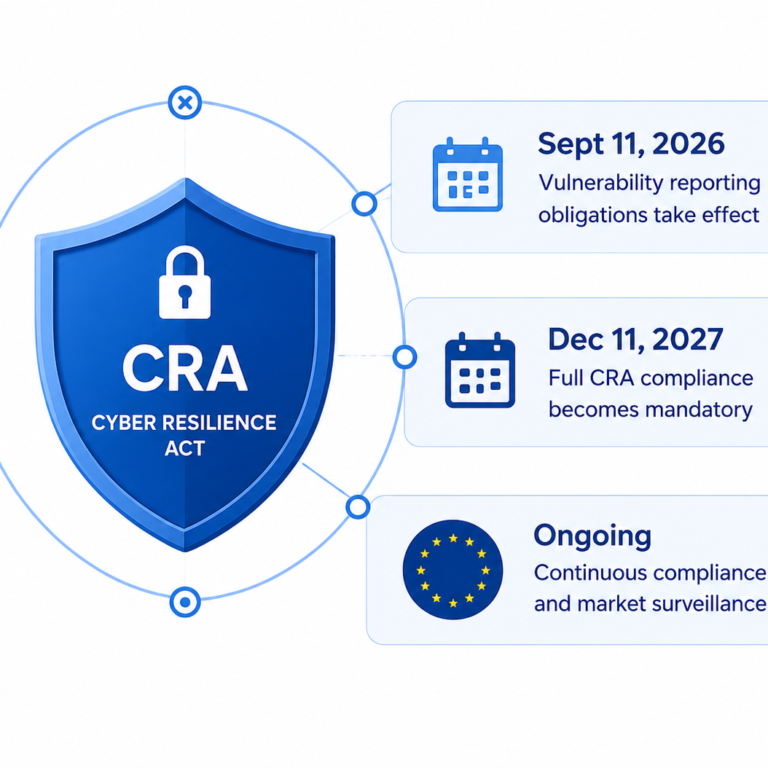
On 27 July 2026, the European Commission published extensive guidance on the application of Regulation (EU) 2024/2847 — the Cyber Resilience Act (CRA). The document addresses several of the most debated issues that have remained unclear for software vendors, hardware manufacturers, IoT companies, component suppliers, and open-source projects. Its practical significance is substantial. The CRA…
In June 2026, NIST released Special Publication 800-18 Revision 2 – Developing Security, Privacy, and Cybersecurity Supply Chain Risk Management Plans for Systems, marking the first comprehensive update to the guidance in nearly two decades. The new publication fundamentally redefines the purpose of the System Security Plan (SSP), integrating cybersecurity, privacy, and Cybersecurity Supply Chain…
On 20 May 2026, the European Commission officially launched both a public and targeted consultation on the review of the Markets in Crypto-Assets Regulation (MiCA). Although MiCA has been fully applicable for less than two years, the Commission has already begun assessing its effectiveness and identifying areas where the regulatory framework may require adjustment. This…
In April 2026, Mastercard joined the Blockchain Security Standards Council (BSSC) as a charter-level member. This move reflects a structural shift in the blockchain industry—from fragmented, project-level security practices toward standardized, system-wide security frameworks aligned with traditional financial (TradFi) controls. The implication is clear: blockchain infrastructure is transitioning into a regulated, security-critical financial layer, requiring…
The European Cybersecurity Act (CSA), adopted in 2019, was designed as the foundation of a unified cybersecurity framework across the EU. It pursued two primary objectives: establishing ENISA as the central cybersecurity authority and creating a pan-European certification framework for digital products and services. At the time, this approach was a rational attempt to reduce…
Cybersecurity Exercise Methodology: A Structured Approach to Assessing Organisational Readiness for Cyber Incidents Modern organisations operate in an environment of continuously evolving cyber threats, where security incidents can lead to operational disruption, financial losses, regulatory exposure, and reputational damage. In this context, implementing security technologies and policies alone is insufficient. Organisations must also ensure their…
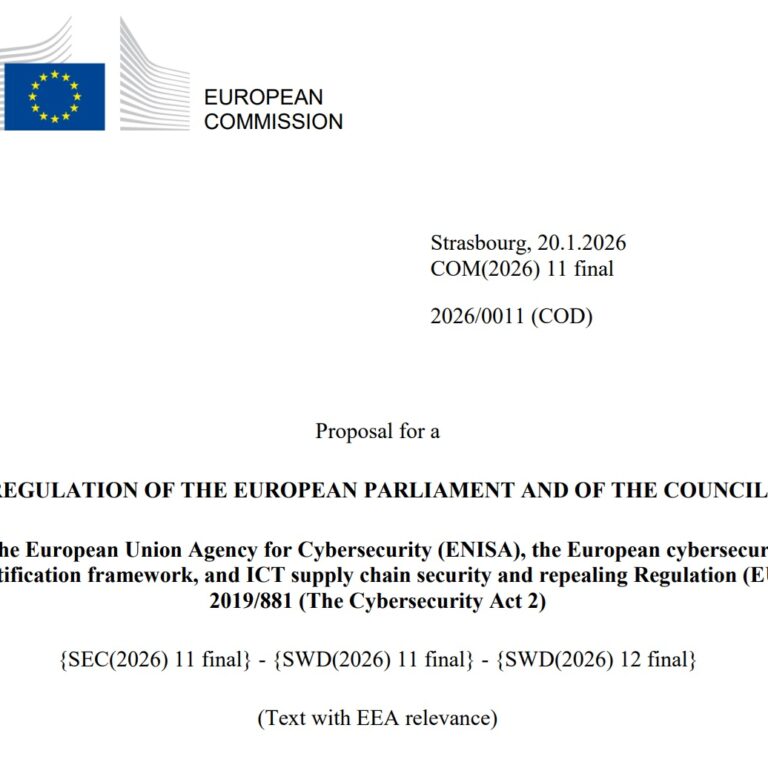
On 20 January 2026, the European Commission presented the draft updated Cybersecurity Regulation — Cybersecurity Act 2 (CSA2). The proposal fundamentally revises ENISA’s mandate, reboots the European cybersecurity certification system and introduces an EU‑wide framework for managing risks in ICT supply chains. 1. Rationale and Overall Logic of CSA2 Since the first Cybersecurity Act was…