I would identify 10 major trends, but in practice the market is currently being shaped by four fundamental shifts: AI, identity, the speed of vulnerability exploitation, and supply chain security.
1. AI Has Evolved from an Attacker’s Assistant into Attack-Scaling Infrastructure
The biggest change this year is that AI is materially reducing the cost and time required to execute established stages of an attack: reconnaissance, vulnerability analysis, phishing and social engineering, code generation and adaptation, credential abuse, and evasion.
According to the CrowdStrike Global Threat Report 2026, AI-enabled adversary activity increased by 89%, while the fastest observed breakout time was 27 seconds. Verizon’s 2026 DBIR also reports that AI is shrinking the window between vulnerability discovery and exploitation — in some cases from months to hours.
The fundamental change is that automation used to be largely deterministic: scanners, exploit frameworks, phishing kits, and malware builders. We are now seeing the ability to automate the decision-making layer between these tools.
The real risk is therefore not simply that “AI wrote malware,” but rather the following model:
detect → investigate → select target → adapt technique → execute → assess outcome
This marks the beginning of a transition toward agentic cyber operations.
- AI Agents Have Become a New Attack Surface
A year ago, the primary question was:
“How do we protect data from ChatGPT?”
The question is now different:
“What can an AI agent do if it is deceived or compromised?”
An agent may have:
- its own identity;
- API access;
- credentials and tokens;
- memory;
- access to corporate data;
- the ability to invoke tools;
- the ability to perform real-world actions.
As a result, prompt injection is no longer simply an interesting LLM security issue. It can potentially be used to make an agent:
- disclose sensitive data;
- invoke the wrong API;
- modify configurations;
- transmit information to a third party;
- perform a sequence of individually legitimate but collectively dangerous actions.
NIST is already separately documenting and formalizing AI-agent security issues. Key areas include identity, access control, tool use, observability, and human oversight.
In my view, this is one of the most promising emerging markets in cybersecurity.
A new security stack is emerging:
AI Security → Agent Security → Non-Human Identity → Agent Authorization → Agent Monitoring
- Identity Has Definitively Become the Primary Security Perimeter
One of the strongest trends is that attackers increasingly do not try to “break into” systems.
They simply log in.
Cloudflare’s 2026 Threat Report explicitly describes the shift from breaking in to logging in. CrowdStrike reports that 82% of detections were malware-free, with valid credentials, trusted identity flows, and approved SaaS integrations being used instead of traditional malware.
This includes:
- stolen credentials;
- session and token theft;
- infostealers;
- OAuth abuse;
- MFA bypass;
- SaaS-to-SaaS integrations;
- service accounts;
- machine identities;
- API keys;
- AI agents.
Traditional IAM is therefore no longer sufficient.
The market is moving toward:
- ITDR;
- Identity Security Posture Management;
- continuous authentication;
- phishing-resistant MFA;
- token and session protection;
- PAM for both human and non-human identities.
IBM also emphasizes the need to manage human and non-human identities simultaneously.
Key takeaway
Zero Trust is no longer primarily about network access.
The next generation of Zero Trust looks roughly like this:
Verify every human, service, workload, API, and AI agent.
- Exploit Management Is Becoming More Important Than Traditional Vulnerability Management
This is arguably one of the most practical trends.
According to the 2026 DBIR, exploitation of software vulnerabilities overtook stolen credentials as the leading initial access vector for the first time: 31% of breaches began with vulnerability exploitation.
IBM reports:
- a 44% increase in exploitation of public-facing applications;
- 56% of disclosed vulnerabilities in its dataset did not require authentication to exploit.
CrowdStrike also reports an increase in zero-day exploitation and particular focus by state actors on edge devices.
The traditional process:
CVE → scanner → ticket → patch at some point
no longer reflects operational reality.
The emerging model is:
Exposure → Exploitability → Reachability → Asset Criticality → Active Threat Intelligence → Automated Mitigation
The market is moving from:
Vulnerability Management
to:
Exposure Management / Continuous Threat Exposure Management
The most critical areas include:
- internet-facing assets;
- VPNs;
- firewalls;
- edge appliances;
- SaaS;
- cloud control planes;
- CI/CD;
- exposed APIs.
- Supply Chain Security Now Extends Far Beyond Software Dependencies
Supply chain risk has expanded significantly.
Previously, the discussion focused primarily on:
- SolarWinds;
- open-source dependencies;
- CI/CD;
- compromised packages.
Today, the supply chain also includes:
- SaaS integrations;
- OAuth connections;
- developer identities;
- GitHub/GitLab;
- AI coding assistants;
- ML models;
- AI plugins and tools;
- MCP-like tool integrations;
- third-party APIs.
IBM reports an almost fourfold increase in major supply-chain incidents over the past five years. Cloudflare’s 2026 Threat Report separately highlights the risk of over-privileged SaaS-to-SaaS connections, where the compromise of a single API can affect multiple corporate environments.
ENISA also identifies attacks against the AI supply chain, including poisoned ML models, trojanized packages, and manipulation of configurations and rules used by AI coding assistants.
The new security perimeter
Previously:
Network → Endpoint → Application
Now:
Identity → API → SaaS → Dependency → Cloud → AI Agent
This is where significant demand is likely to emerge for:
- SaaS Security;
- SSPM;
- API Security;
- CI/CD Security;
- Software Supply Chain Security;
- AI Supply Chain Security.
- SOC Operations Are Moving from Analyst-Driven to AI-Assisted and Agentic Operations
This is still an early-stage transition, but the direction is clear.
AI is already well suited for:
- triage;
- enrichment;
- alert correlation;
- investigation;
- log analysis;
- malware classification;
- threat-hunting assistance;
- playbook generation;
- remediation recommendations.
The next stage is likely to involve multiple specialized agents working together.
IBM is explicitly promoting the concept of autonomous security operations, where agents operate across the workflow from threat hunting through remediation.
However, a fully autonomous SOC remains unrealistic for serious environments.
The more likely near-term model is:
AI handles volume. Humans handle ambiguity and accountability.
As a result, the amount of manual L1/L2 work will decline.
Human value will increasingly shift toward:
- detection engineering;
- threat hunting;
- incident command;
- architecture;
- adversary simulation;
- AI security;
- automation engineering.
- Ransomware Is Becoming Faster, More Fragmented, and More Destructive
Ransomware is not disappearing, but it is changing.
Mandiant reports that the median hand-off between initial access and the transfer of access to another criminal group fell to approximately 22 seconds in 2025.
IBM identified 109 distinct extortion groups, compared with 73 the previous year.
Beyond encryption and data theft, attackers are increasingly targeting the infrastructure required for recovery:
- backup infrastructure;
- identity systems;
- virtualization layers;
- cloud control planes.
Mandiant specifically highlights targeted attacks against these layers designed to deprive organizations of their ability to recover.
This changes the priority from simply:
Prevent ransomware.
to:
Assume compromise. Preserve recoverability.
This makes the following increasingly important:
- immutable backups;
- isolated recovery;
- identity recovery;
- Active Directory recovery;
- virtualization security;
- cyber resilience testing.
- Deepfakes and Fake Identities Are Moving from Fraud into Corporate Intrusion
This is no longer limited to CEO fraud.
A more serious model is emerging:
Fake identity → fake employee → legitimate corporate access
Cloudflare’s 2026 Threat Report describes the use of deepfakes, fraudulent identities, and remote IT-worker schemes, including operations attributed to North Korean groups seeking legitimate access through employee recruitment.
This increases the importance of:
- identity verification;
- employee onboarding security;
- hardware provenance;
- device control;
- behavioral monitoring;
- insider risk management.
The problem of verifying that a person is who they claim to be is becoming a cybersecurity problem in its own right.
- DDoS Has Reached a Scale Where Manual Response Is No Longer Viable
The 2025–2026 period saw continued rapid growth in hyper-volumetric DDoS attacks.
Cloudflare recorded a 31.4 Tbps attack in late 2025, while in the first half of 2026 it recorded 935 network-layer attacks exceeding 1 Tbps.
The key conclusion is not simply that attacks are getting larger.
The more important point is:
Human-in-the-loop response can no longer keep pace.
Availability security is becoming increasingly automated:
- automated detection;
- automatic mitigation;
- traffic engineering;
- edge filtering;
- upstream protection.
- Security Is Becoming a Governance and Regulatory Engineering Problem
Cybersecurity is increasingly moving beyond the sole responsibility of the CISO.
Over the past year, regulatory pressure has intensified around:
- NIS2;
- DORA;
- the Cyber Resilience Act;
- the AI Act;
- incident-reporting requirements;
- software security requirements.
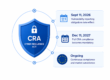
In the EU, the Cyber Resilience Act makes the security of software and hardware products a mandatory part of the product lifecycle.
The AI Act also increases risk-management requirements for advanced AI systems.
At the same time, the practical transition toward Post-Quantum Cryptography has begun. The EU recommends that member states start migration by the end of 2026, with critical infrastructure protected no later than 2030.
This is creating distinct markets around:
- Cyber Governance;
- AI Governance;
- Security Compliance Automation;
- Software Product Compliance;
- Cryptographic Agility;
- PQC Migration.
If I Had to Reduce the Entire Year to One Formula
2025 was the year of AI in security.
2026 is becoming the year of AI as a full participant in security architecture.
And the main structural shift, in my view, is this:
Previously, we protected users, devices, and networks.
Now we also need to protect and control autonomous software entities.
An AI agent is simultaneously becoming:
- a new user;
- a new service identity;
- a new insider-risk vector;
- a new attack vector;
- and, at the same time, a new security analyst.