Analysis of Global Cybersecurity Trends: Global Cybersecurity Outlook 2025
Introduction The modern cyber landscape is becoming increasingly complex, with digital risks growing more sophisticated. The “Global Cybersecurity Outlook 2025” report, prepared by the World Economic Forum (WEF) in collaboration with Accenture, analyzes key challenges facing organizations and proposes strategies to enhance cyber resilience.
Key Challenges of 2025
- Geopolitical Risks and Their Impact on Cybersecurity
- Intensifying international conflicts increase the risk of cyberattacks on critical infrastructure.
- 60% of organizations have already adjusted their cybersecurity strategies due to political instability.
- Threats from nation-states are now actively combined with cybercriminal tactics.
- Increasing Complexity of Cyberattacks
- The advancement of AI, including generative models, enhances the effectiveness of phishing and social engineering attacks.
- 72% of organizations report a rise in cyber risks, particularly ransomware and supply chain attacks.
- Cybercrime is becoming a service: the emergence of “Cybercrime-as-a-Service” (CaaS) makes attacks more accessible to less experienced perpetrators.
- Shortage of Qualified Specialists
- In 2025, the cybersecurity skills gap has widened by 8% compared to the previous year.
- Only 14% of organizations are confident they have the necessary talent to protect their digital assets.
- The development of automated systems and AI may partially compensate for the shortage of professionals but will not fully resolve the issue.
- Regulatory Pressure and Fragmentation of Compliance Requirements
- 76% of CISOs note that the diversity of international cybersecurity regulations complicates compliance efforts.
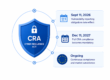
- New regulations (DORA, NIS2, CIRCIA) require significant investment in compliance processes.
- Strengthened supply chain oversight: 54% of large organizations consider third-party risk management a primary barrier to cyber resilience.
Cyber Resilience Strategies
- Shifting from Reactive to Proactive Strategy
- Utilizing AI and machine learning to predict and prevent attacks.
- Developing integrated cybersecurity platforms to reduce solution fragmentation.
- Implementing “Zero Trust” principles to minimize insider threats.
- Enhancing Supply Chain Resilience
- Establishing cybersecurity requirements for all suppliers and partners.
- Expanding the use of monitoring and security audits for third parties.
- Developing training and certification programs for vendors.
- Adapting to New Technological Challenges
- Preparing for quantum threats: 40% of companies have already begun risk assessments in this area.
- Developing protective mechanisms against AI-generated attacks, including deepfake detection and automated phishing schemes.
- Creating new security standards for integrating artificial intelligence into critical systems.
Conclusion The year 2025 is set to be a turning point for cybersecurity: the rise of threats, the talent crisis, and new regulatory requirements demand that organizations rethink their data protection approaches. Success in this domain will only be achievable through close collaboration between businesses, governments, and the expert community. Companies that adapt to new realities and invest in proactive strategies will gain a competitive edge in the face of increasing cyber threats.