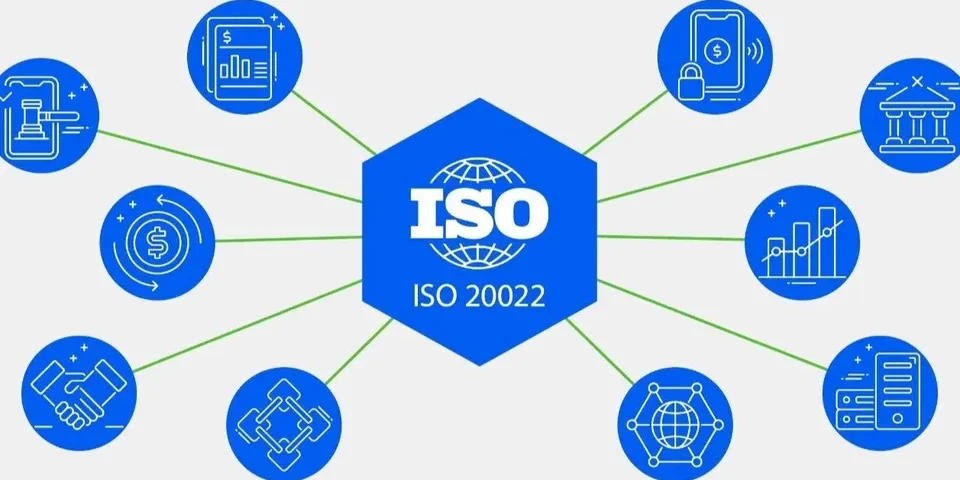
The financial industry is undergoing one of the largest technological shifts in decades — the migration to ISO 20022. Between 2023 and 2025, SWIFT and major payment systems (Target2, Fedwire, CHAPS) are adopting the new messaging format.
For banks and corporates, this means:
- richer data,
- higher automation,
- improved interoperability.
But for information security and compliance professionals, it also means a new level of risks and control requirements.
ISO 20022 vs. SWIFT MT
ISO 20022 is a unified financial messaging language, based on a common data model and technology-neutral design. Primary formats: XML, JSON, API.
Key differences from SWIFT MT:
- Structured, enriched data (addresses, LEIs, payment purpose details).
- Extensibility: adaptable to local regulatory requirements.
- Universality: one standard across payments, securities, cards, trade finance.
From a business perspective, it’s the foundation of global interoperability. From a security perspective, it significantly increases the volume of sensitive data that must be protected.
Opportunities and Benefits
- Transparency: AML/KYC processes benefit from enriched data sets.
- Automation: fewer manual interventions → fewer errors.
- Interoperability: unified messaging simplifies cross-border payments.
- Innovation: easier integration with APIs and smart contracts.
All of these advantages, however, rely on strong data protection.
Cybersecurity Risks in ISO 20022
1. Data Leakage
- Messages carry extended PII and corporate identifiers.
- A single breach can result in large-scale exposure.
2. MT ↔ ISO 20022 Translation Vulnerabilities
- During the transition period, converters bridge the two formats.
- Flaws in translation logic = risk of data tampering and fraud.
3. API-First Architecture
- APIs streamline integration but open new attack vectors (MITM, spoofing, DDoS).
4. Monitoring and SIEM Gaps
- SOC teams must adapt correlation rules for ISO 20022 message structures.
- Legacy AML/sanctions monitoring may become ineffective.
5. Compliance Risks
- GDPR, FATF, PCI DSS, and local data laws increase accountability.
- Handling enriched data without proper governance can trigger fines and sanctions.
Best Practices for Security and Compliance
Encryption & Tokenization
- Field-level encryption for sensitive data.
- Tokenization for PII.
Zero Trust for APIs
- Strong authentication and identity management.
- Anomaly detection for API traffic.
SOC/SIEM Adaptation
- New AML/sanctions use-cases tailored to ISO 20022.
- Updated log correlation for enriched message formats.
Audits and Testing
- Pen-tests of bridges and APIs.
- Red Team exercises focused on payment scenarios.
Compliance Integration
- Align with ISO 27001, NIST CSF, and local regulations.
- Ongoing gap analysis against GDPR and FATF standards.
Strategic Takeaway
ISO 20022 is more than just a new message format — it is the foundation of the future financial infrastructure. For banks and fintechs, it offers automation and efficiency. For InfoSec and compliance teams, it raises the bar: data protection must be rethought, SOC processes modernized, and governance frameworks updated.
Organizations that integrate security and compliance into their ISO 20022 migration will gain a double advantage:
- reduced risk of incidents and penalties,
- stronger trust from clients and regulators.
ISO 20022 is the language of future finance. Security and compliance are its grammar.